One of the rarest albums from Sweden, if not THE rarest. Primarily a jazz funk album with blues overtones, that features none other than Janne Schaffer on guitar. Pressed in a micro quantity of 200 copies. Privately released album in an era when that kind of thing was unheard of. Great production, and some splendid guitar, trumpet, sax and organ work (ESPECIALLY the organ). Opening track is a killer horn rock piece ala primo Chicago. Line-up / Musicians Lennart Axelsson/trumpet Mats Eriksson/trombone Kalle Lundborg/saxophone Olle Wirén/saxophone Bengt Lindqvist/keyboards Janne Schaffer/guitar Jan Bergman/bass Nils-Erik Svensson/drums Discography(Album) Hörselmat 1971
1.Introduktion...... Ta er i brasan 2.Den dan vi sket i Hugo Montenegros arrangemang 3.Teryleneblus 13:50 EPA 4.En mäktig eldaregesäll - ej Taube 5.Right on - Kliv på 6.Va då rå - va e' reö, de e' vel okey 7.Undrar om Mona och Kent spelar den här.... 8.Riff á la Lindström
Formed in the fall of 68, Skin Alley turned professional when they signed to Clearwater Productions as managers (whom also handled High Tide, The Trees and a bit later Hawkwind), on word from an ex-member that was now in the firm. Gigging around regularly for free (concerts organized by their management firm) in order to find a following, this West-London quartet developed a different kind of rock that drew much from jazz and blues. Built around keyboardist Juskiewicz and part-time guitarist, but sax and flute player Bob James, Skin Alley had a distinctive sound, which made them stand out at the many free concerts they played. Having been spotted by the legendary John Peel, they recorded a BBC session for the Top Gear program, which in the short term landed them a recording contract with the English branch of CBS. Recorded in November of that year, it was released in March 70 coupled with a non-album single. The critical acclaim and encouraging sales lead CBS to allow Skin Alley (who suffered the departure of Crimble during the recording and was partly replaced by ex-Atomic Rooster bassist Nick Graham) to release a second album, From Pagham And Beyond, later that same year. For some reasons (the album was not as successful as the debut), CBS decided not to invest further in the band, and Skin Alley had to find another label, which took a while. It wasn't until early 72 that their third album was released on the small folk Transatlantic label (and amazingly enough, the soul Stax label in the US), but by that time Skin alley was a different band, drummer Pope had left the group, replaced by Tony Knight, and the SA had a much rockier approach aimed at the US, even enjoying some success with the track Skin Valley Serenade. Their third album Two Quid Deal offers much prog while they recorded the last album Skintight in Memphis, Tennessee (home of Stax Record), maybe a hint that they had axed everything towards America, because of its country rock flavours. They disbanded the following year and outside Graham, none were to make much waves in the music industry. Line-up / Musicians Thomas Crimble/bass,keyboards,vocals Bob James/guitar,saxophone Krzysztof Henryk Justkiewicz/keyboards Alvin Pope/drums Discography(Album) Skin Alley 1970
1.Living In Sin 2.Tell Me 3.Mother Please Help Your Child 4.Marsha 5.Country Aire 6.All Alone 7.Night Time 8.Concerto Grosso (Take Heed) 9.(Going Down This) Highway
Originally a trio comprising Jim Cregan (b. James Cregan, 9 March 1946, Yeovil, Somerset, England; guitar/vocals), Charlie McCracken (b. Richard McCracken; bass) and John Wilson (drums), Stud formed from the ashes of Taste, a band that included both McCracken and Wilson in its ranks. Wilson had also been a member of Them, while McCracken had previously played in Blossom Toes and Julian Covey And Machine. This central trio was quickly supplemented by the addition of former Family guitarist and vocalist John Weider (b. 21 April 1947, Shepherd’s Bush, London, England) after the release of their debut album, a self-titled effort released in 1971 on Deram Records. This set, which secured significant press acclaim, established jazz rock as the band’s métier. Although in retrospect the songwriting did not equal their obvious instrumental skill, it was enough to earn the band a strong following in Germany. Both their subsequent albums were released in that country alone as part of a contract with BASF Records, a situation owing in no small part to their manager Eddie Kennedy’s ructions with Deram. However, German sales alone were not enough to support the band, and soon after the release of 1973’s Goodbye Live At Command Cregan left to join Family, Weider moving on to Moonrider, and McCracken joining a re-formed version of the Spencer Davis Group. Wilson, the final remaining member, attempted to resurrect the band name by recruiting Andy Sneddon (bass, ex-East Of Eden) and Snowie White (guitar), but this line-up never recorded. Line-up / Musicians Jim Cregan/guitar,vocals John Weider/violin,piano,guitar,vocals John Wilson/drums Richard "Charlie" McCracken/bass Discography(Album) Stud 1971
1.Sail On 2.Turn Over the Pages 3.1112235 4.Harpo's Head 5.Horizon 6.Song
70's psych / progressive collective from Germany underground, incorporating fuzzed out guitar improvisations, west coast influences, "retro" pop elements and folk acoustic "exoticism". The band was formed by Dietmar Burmeister (Agitation Free, Ashra Tempel). Their album "We hope to see you" (1974) has been published on German label Delta Acoustics (known for the releases of Sand and Code III). The recordings are blending several styles in its entirety making it really impossible to categorize. Line-up / Musicians Michael Sauber/sax,flute Bernie Schumacher/sax Jorg Hahnfeld/bass,guitar Dietmar Burmeister/drums,percussion Lothar Muschinski/vocals,guitar Klaus Pankau/guitars,vocals Discography(Album) We Hope To See You 1974
1.Out Of The City 2.Seerock 3.Scizoid Game 4.Black Suits 5.Espresso Brasil
Led by female/male vocals and rich harmonies…The Chicago hippie crew “String Cheese” could have been the next “It’s A Beautiful Day” with proper backing and encouragement. Like that San Francisco band, String Cheese’s sound was steeped in sparkling hippie subject matter, strongly delivered by chanteuse Sally Smaller and aided by electric violin & acidy guitar leads.Unfortunately, their debut album was also their last. Lead, 12-string guitarist and co-vocalist Lawrence Wendelken wrote most of the songs on String Cheese, and there are some truly tasteful arrangements contained within. “Soul Of Man”, for example, benefits from lush, live arrangements with folksy acoustic guitar picking and sparse drums, while a Larry and Sally voice trade offs and harmonies shine on the winding road that is the human experience. Line-up / Musicians John Maggi/Drums Gregory Bloch/Violin Louis Constantino/Bass William Dalton/Organ,Piano,Celeste,Guitar Sally Smaller/Vocals Larry Wendelken/Guitar,Vocals Discography(Album) String Cheese 1971
1.For Now 2.Crystal 3.We Share 4.Here Am I 5.Empty Streets 6.Forage 7.Soul of Man 8.Certain Kind of Day 9.Woke Up This Morning/Coming 10.Coming
In 1973, immediately after the release of « Tarot » with Walter Wegmuller and during improvised sessions of the Cosmic Jokers, Rolf Ulrich Kaiser (producer, founder of the « cosmic couriers » label) publishes an other 'acid' musical experience with his project 'Lord Krishna von Goloka'. For this highly mystical adventure around India, Oriental mythologies and legends, the Kaiser asked the Swiss esoteric writer Sergius Golowin to join the group. 'Lord Krishna Von Goloka' is Sergius Golowin's unique musical collaboration. Sergius Golowin's intellectual & spiritual world (made of occultism, popular legends, shamanism.) takes a major importance for the conceptualization of the project. Golowin is notably responsible of lyrics, making incantatory voices and recitations in German for intriguing "acid" folk based compositions. The album features usual musicians employed for the Cosmic Jokers jam sessions (the guitarist Manuel Gottsching, the keyboarder Klaus Schulze.). In addition we can notice the obvious presence of the Munich folk artists Walter Westrupp & Bernd Witthuser (on flute, percussions, acoustic guitars.). This album sounds like an evident cross between the pastoral flavor of Teutonic prog folk and the intergalactic mood of krautrock. Consequently, this is an imaginative, freak out musical experience to serve the philosophy of Rolf Kaiser's business "Kosmischen Kuriere". Line-up / Musicians Sergius Golowin/voice Jerry Berkers/guitar,bass,bongo Jurgen Dollase/piano,melotron,vibrafon,guitar Jorg Mierke/guitar,organ,percussion,flute,conga Klaus Schulze/drum,organ,electronics Walter Westrupp/guitar,flute,tablas,percussion Bernd Witthuser/guitar Discography(Album) Lord Krishna von Goloka 1973
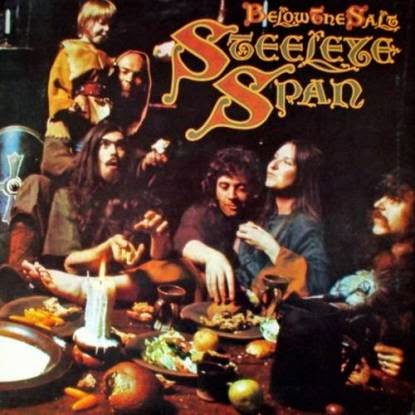
As one of the two most important bands to blend traditional British folk music and rock - the other being the legendary Fairport Convention - STEELEYE SPAN represented both the revival of this music in Britain and its ventures into contemporary times. Completely authentic but with a modern spark their peers never quite matched, the ensemble's development was one of the most evolving in popular music. By 1969, an electrically charged Folk scene had fully emerged in England. That year after a road accident in which their drummer was killed, singer Sandy DENNY and FAIRPORT CONVENTION recorded 'Liege and Lief', a project led by bassist Ashley HUTCHINGS and Richard THOMPSON's startling electric guitar. The album would influence an entire movement though the group was divided about this direction and split, FC proceeding without HUTCHINGS or DENNY. Ashley HUTCHINGS carried on and after a good first rehearsal with established Folk duo Maddy PRIOR & Tim HART and husband and wife team Terry & Gay WOODS, a first incarnation recorded STEELEYE SPAN's the group's name is taken from a character in Lincolnshire ballad 'Horkstow Grange' debut in 1970, 'Hark! The Village Wait'. Comprised of trad. Folk with the added dimension of HUTCHINGS's bass and guest drummers Gerry CONWAY and Dave MATTACKS, the album is also noted for the dual female vocals of PRIOR and WOODS. Terry and Gay WOODS were replaced that year by veteran guitarist/singer Martin CARTHY and violinist Peter KNIGHT. This line-up recorded 'Please to See the King' (1971) and 'Ten Man Mop, or Mr. Reservoir Butler Rides Again' (1972), LPs unique in their use of hard rock colors. By late 1972, CARTHY and founder HUTCHINGS left to pursue more purist Folk avenues. Guitarist Bob JOHNSON and bassist Rick KEMP were brought in and provided an expanded hard-blues sound to Steeleye, and the group secured a new contract with Chrysalis which released their fourth, 'Below the Salt' in late '72. Further cultivating electric blues but always showcasing traditional Celtic and folk, some numbers dating back over a hundred years, 1973's 'Parcel of Rogues' was released and later that year the band drafted rock drummer Nigel PEGRUM [GNIDROLOG,URIAH HEEP,SMALL FACES]. Having supported fellow Chrysalis act JETHRO TULL several times, it was fitting that Ian ANDERSON helped produce Span's sixth LP 'Now We Are Six' (1974) which included an appearance by David BOWIE on saxophone. After 1975's 'Commoner's Crown' (featuring Peter SELLARS on ukulele for one cut), STEELEYE SPAN's next record 'All Around My Hat' would yield their biggest chart success with the title song reaching #5 in the U.K. Their eighth studio effort 'Rocket Cottage' was released in 1976 and by '77 Bob JOHNSON and Peter KNIGHT had left. For 'Storm Force Ten' earlier member Martin CARTHY rejoined on guitar and after this period, members tended toward other projects, solo outings or different ventures entirely.Since their glory years the band has reformed several times; 2002 saw the classic line-up gather to release 'Present', a 2-disc set of new re-recordings, and 'They Called Her Babylon' was released in 2004 which featured a return of Maddy PRIOR. In 2008 there was a UK tour and a new album in 2009 to commemorate STEELEYE SPAN's forty years making music. Line-up / Musicians Tim Hart/vocals,guitar Maddy Prior/vocals Peter Knight/violins,mandolin,banjo,piano Rick Kemp/bass Bob Johnson/guitar Discography(Album) Below The Salt 1972
1.Spotted Cow 2.Rose Bud In June 3.Jigs: The Bride's Favorite, Tansey's Fancy 4.Sheep-Crook And Black Dog 5.Royal Forester 6.King Henry 7.Gaudette 8.John Barleycorn 9.Saucy Sailor
STOMU YAMASH'TA was born in 1947 in Kyoto Japan, with the name Yamashita Tsutomu. Since the late 60's he has developed an international reputation as a composer and performer (percussion, keyboards) of serious music, jazz rock fusion, rock, electronica as well as multi-media projects for the theatre, a ballet score ("Shukumei" ) and cinematic soundtracks. He studied jazz. He has toured and played with the Chicago Chamber Orchestra and the rock group Come to The Edge. YAMASH'TA has recorded not only jazz rock fusion and rock but music by the serious modern composers Maxwell-Davis and Henze.He came to Europe in the early 70's working briefly in France on theatrical multi-media projects (e.g. the precursor for "Red Buddah Theatre" and "The Man From The East") before moving across the Channel to England. Through the 70's YAMASH'TA recorded the majority of his 70's albums in the UK but alas very few of the Island Records recordings have been issued on CD. He has composed the soundtracks of the David Bowie film "The Man Who Fell to Earth" (which borrowed significantly from earlier recordings), Ken Russell's "The Devils", and race car documentary "One By One".STOMU YAMASH'TA is probably best known nowadays as the leader of the supergroup GO with STEVIE WINWOOD, AL DIMEOLA, KLAUS SCHULZ and MICHAEL SHRIEVE for three albums and related performances. However, prior to forming GO, YAMASH'TA played not a small part in nurturing musicians who were subsequently better known for playing in important 70's UK jazz rock groups, e.g. BRAND X and ISOTOPE - this is worth expanding since this aspect of his work (relevant to Progarchives) is often neglected on the web. YAMASH'TA attracted musicians such as MORRIS PERT and GARY BOYLE (previous known for working with BRIAN AUGER) to his "Red Buddah Theatre" project/recording (one of the few albums available on CD) and then on several later recordings. MORRIS PERT with that other future BRAND X player PETER ROBINSON recorded first as SUNTREADER. YAMASH'TA recruited ex SOFT MACHINIST HUGH HOPPER to what would become the critically acclaimed 1973 recording "Freedom Is Frightening" - one of those albums that is crying out for CD release, with BOYLE and HOPPER working together for the first time. GARY BOYLE went on to form ISOTOPE, which of course HUGH HOPPER joined for their second recording "Illusion". In 1974 YAMASH'TA formed the band EAST WIND.After leaving Europe in 1980, STOMU YAMASH'TA retired to a Buddhist temple in Kyoto. Such retirement was brief and he then released a number of recordings employing synthesisers, pre-recorded taped sounds, orchestral instruments and percussion. Of these recordings the so-called 'space music' of the 1983 record "Sea and Sky" is available on CD. He continues to occasionally release albums in this electronica/ambient genre. Line-up / Musicians Stomu Yamash'ta/Keyboards,Percusion Morris Pert/Drums,Prcussion Powel/bass Thompson/Organ,Piano,sax Plant/Bass Robinson/Piano Discography(Album) Floating Music (with Come to the Edge) 1972
Som Imaginário (Imaginary Music) is a Brazilian band from the 70s. They joined together to support Milton Nascimento in his first record and shows. Their style comes from jazz, classic and rock until popular Brazilian music and bossa nova, with strong Beatles influence. They recorded three albums in the 70s and an album live with Milton Nascimento in 1974 releasing them in a boxset in 1997, but it was limited edition. Famous people were Imaginary Music: Naná Vasconcelos, Robertinho Silva, José Rodrix, Toninho Horta, Wagner Tiso, Tavito and Marco Antônio Araújo. This last person recorded four very progressive albums later, but unfortunately died in 1986. The first and second Som Imaginário albums follow the psychedelic line with Beatles and pop influences. José Rodrix left the band, and Wagner Tiso (ex W-Boys jazz band) leaded the band for the new album. The third album "A Matança do Porco" (The slaughter of the pig) is an all instrumental album (with voices but no lyrics), following the fusion and symphonic direction. Some people prefer their first phase, others the third album. Line-up / Musicians Wagner Tiso/keyboards Luis Alves/bass Robertinho Silva/drums Tavito/violin Fredryko/guitar Ze Rodrix/keyboards,vocals,flute Laudir de Oliveira/percussion Nana Vasconcelos/percussion Discography(Album)
Antonio Sangiuliano, a composer from Tuscany, released his only album in 1978 on RCA. Take off is a mainly instrumental album where Sangiuliano plays every kind of keyboards, being only helped by drums (Derek Wilson and Enzo Restuccia) and a soprano singer (Elisabetta Delicato) in some short parts. The atmospheres remind of some Tangerine Dream's works and the album is rather unusual for the Italian progressive style. First side is taken by the 16 minutes long Time control, while the second side only has two tracks. The album was produced by Adriano Monteduro, who had released his first solo album with Reale Accademia di Musica.Sangiuliano also recorded a second album, Out of breath, but this was never released at the time in Italy and its rights were sold to a japanese record company. Line-up / Musicians Antonio Sangiuliano/keyboards Elisabetta Delicato/voice Derek Wilson/drums,timpani Enzo Restuccia/drums Discography(Album) Take Off 1978
Slogans is an Italian progressive rock who release only one album in 1983 named Photosynthesis, and re released on CD by already by famous label Mellow records in 1993 with 5 pieces as bonus (but on the CD is not specified that they are bonuses)recorded live in studio, one track from that bunch Fotosintesi were not on original issue. So what we have here, the album released in a period when prog music was deeply in the shadow of other musical styles such as heavy metal or hard rock, Slogans manage to come with a good album yet very thin and pale in comparison with other releases from that period. Influenced by bands from Italian school like Locanda Delle fate or PFM with romantic arrangements that reminds at some point of German band Rousseau. A swell on most energetic moments like opening track La Festa Del Tiranno, the best piece from here, they have the sound of Genesis - Trick of the tail era. The album has some instrumental pieces , who seems to me the best moments of the album, Bianca gives to the album a romantic feel. Line-up / Musicians Roberto Gamo/vocals,guitar Ivano Tolio/piano,synthesizer,vocals Palmiro Gnoato/bass Marco Carlesso/drums Silvia Bizzotto/vocals Michele Bianchin/synthesizer Discography(Album) Photosynthesis 1983
1.La Festa Del Tiranno 2.With The Sun We Hide 3.Bianca 4.Old Family 5.Aspetto Il Giorno 6.Corri Nel Vento 7.Fastum 8.Smiling Sun 9.Con La Tua Musica 10.L'Altra Faccia 11.La Festa Del Tiranno(Live) 12.Fastum(Live) 13.Fotosintesi(Live) 14.L'Altra Faccia(Live) 15.Old Family(Live)
One of the effects of reform within the Catholic Church in Italy during the 1960s was the emergence of the ''Messa beat'' (literally translated as ''Mass beat''), a branch of Christian music with particular appeal to young people due to its combination of rock and religion. Its spread during the 1970s resulted in a flood of albums inspired by Gospel texts with accompaniment of traditional and electric instruments. The discs were produced by religious labels and sold through specialist religious bookshops but were issued in such limited numbers that they went virtually unnoticed and consequently are nowadays extremely rare. In the vanguard of Christian progressive bands were MESSAGGIO 73, GENFUOCO, and QUEL GIORNO DI UVE ROSSE. However with ''Trasparente'', LA SORGENTE produced what is arguably the finest of all the religious albums, progressive or otherwise. There is some dubiety regarding the album's year of release but most sources have it as 1981.In spite of the harsh economic recession and the socio-political turmoil of The Years of Lead, Italian progressive releases of the late 1970s and early 1980s tended to be of the melodic sort and ''Trasparente'' epitomises this with its delicate acoustic-based fusion of chamber-pop, Mediterranean folk and soft RPI. The cover artwork of the dove of peace set against a sky-blue background gives a clue to the type of music therein, and every song speaks of pious sentiment with lyrics such as: ''I am here, my voice will reach Your ear, and You will hear my love for You now.'' LA SORGENTE fully explore the creative possibilities opened by the meeting of rock music with the realm of faith; the outcome is an intimate work full of restrained yet richly sensuous melodies that reflect the pastoral setting of the lyrics. These are complemented by refined instrumental passages where RPI features are obvious, with the most common artifice being the classic combination of flute, violin and piano. Synthesizer and organ occasionally mingle with 12-string guitar, which is the album's other main unifying characteristic. ''Trasparente'' is considered extremely rare and Paolo Barotto, in his reference book of Italian prog and psych ''Il Ritorno del Pop Italiano'', gives it a rarity rating of ''almost impossible to find.'' At the moment the chance of a re-release seems remote despite Barotto also proclaiming ''Trasparente'' as ''the best of the religious albums'' and stating that ''once discovered it will become one of the most sought after collectables.'' As such, LA SORGENTE are probably destined for legendary cult status although they wouldn't be out of place alongside CELESTE in the forefront of soft RPI bands. Line-up / Musicians Pino Carella/vocals,piano,keyboards Bruno Raia/vocals,,guitar Stefano Martinelli/flute,ottavino,virginal,vocals Daniele Giuliani/violin,vocals Walter Destri/bass Franco Rossetti/drums,percussion Discography(Album) Trasparente 1981
1.Prologo 2.Tutto Si Fermera 3.Tutta La Mia Vita 4.Liberaci Dalla Notte 5.Trasparente 6.La Vecchia Terra 7.Quella Sera D'Inverno 8.Jesus, Oh Jesus 9.Salmo 131 10.Salmo 150 11.Salmo 142
Hailed as one of the greatest Japanese progressive rock bands of all time, SHINGETSU ('new moon') arrived in the Japan music scene in the late 70s to carry the torch which seemed to have been left behind in England. Led by the 'Japanese Peter Gabriel', Makoto Kitayama, with his deep, wavering, mournful vocal, SHINGETSU stirred up some great press with their cinematic progressive sound, which rightly gained them comparisons to peak-time GENESIS. Consisting of Makoto Kitayama, Akira Hanamoto, Naoya Takahahi, Shizuo Suzuki and Haruhiko Tsuda, this promising band unfortunately only lived long enough to make one studio album, followed in later years by two live albums which nevertheless featured some unreleased performances. Their one album proper, the eponymous "Shingetsu", is no less than a masterpiece of symphonic prog, with the soft organ/synth soundscapes, tasteful use of mellotron, and 12-string guitar passages reminiscent of the softer UK bands of the 70s. Kitayama's haunting vocal and intriguing lyrics, however, give SHINGETSU a distinctive edge that is hard to find anywhere else in music even to this day. Line-up / Musicians Akira Hanamoto/keyboards Makoto Kitayama/vocals Shizuo Suzuki/bass Naoya Takahashi/drums Haruhiko Tsuda/guitar Takashi Kokubo/synthesizers Hiroshi Morimura/saxophone Discography(Album) Shingetsu 1979
1.Oni 2.The other side of morning 3.Influential street 4.Afternoon/After the rain 5.Fragments of the dawn 6.Freeze 7.Night collector 8.Return of the night
Italian group with some former members from the excellent RACCOMANDATA RICEVUTA RITORNO. The music could almost be called symphonic pop with some progressive tendencies. Again, a variety of styles are experimented with and again it flows very well. The arrangement include both organ, flute and some strings."Uomo Stanco" (Tired Man) starts off the festivities with Luciano Regoli's fascinating vocals leading the way, in a jazzy romp featuring some airy melodies well anchored by the typical ace rhythm section of bassist Aldo Bellanova and drumster Sandro Conti. This solid confidence gives soloists Stefano Sabatini on keys and the reputed guitarist Nanni Civitenga room to lay down some seductive lines. The following piece "Un Millione d'Anni Fa " is an absolute highlight with serious symphonics pushing the pleasure zones, with some whimsical oboe work and a main theme that is sheer beauty and passion. As good as anything by the other ISP big boys. "L'Angelo" concentrates on showcasing the broad range of Regoli's voice and Nanni's cyclonic guitar, acoustic and harsher electric grooving with some ornate piano work as well. "Passagio di Via Arpino" dives into more flute-led jazz areas (fine e- piano, brass blasts and slick drumming) , this is clear-cut jazz-rock that will please even the tightest critics , Sabatini's keywork in particular is scintillating, passing the torch to Civitenga's wah-laden, chugging guitar phrasings that exude not only technique but a slight sense of mania that is most pleasing, finishing the comp off with some more flute explorations, another first rate track. "Fantasia" serves up some more upbeat rhythms, the bass meticulously leading the way, more swooping vocals and criss-crossing melodies, very cool and elegant and the flute again adding that touch of "légèreté" that is instantly appealing. "Silenzio" is more experimental, much less conventional colorations, with the guitar as the main protagonist, keeping things actually simpler and more linear (some nice Eminent - String synth like instrument- work from Sabatini), with dashes of creative oddity. The 8 minute finale really is the main jewel here, simply exposing all those traits that make ISP so attractive, heavenly melodies, glorious inspiration, technically superb playing by all , all presented in a chiseled and structured package, piano leading the way, each instrumentalist interfacing with their own expressions of style and craft, hinting at early King Crimson territories but with that definite Italian feel, constantly seasoned with some new and unexpected quirk, extraordinary vocal choir work that is simply hair- raising, ripping with unabashed passion again the flute soothing things out nicely. Line-up / Musicians Luciano Regoli/vocals Nanni Civitenga/guitar Aldo Bellanova/bass,guitar Stefano Sabatini/keyboards Sabdro Conti/drums Ruggero Stefani/percussion Stevo Saradzic/flute,sax Discography(Album) Samadhi 1974
1.Uomo Stanco 2.Un Milion D'Anni Fa 3.L'Angelo 4.Passaggio Di Via Arpino 5.Fantasia 6.Silenzio 7.L'ultima Spiaggia
Made up from members of Gilgamesh, Soft Machine and Caravan, Soft Heap were a complex, jazzy and, sadly, short-lived supergroup-of-sorts, who were active at the back-end of the seventies for a short while, producing this memorable studio album in 1978 as well as a live release called 'Al Dente' a year later. Featuring the supremely-talented Alan Gowen(keyboards) - who would die tragically at just 33 thanks to cancer - as well as Pip Pyle(drums), Elton Dean(sax), Hugh Hopper(bass) and Marc Charig(trombone), Soft Heap failed to generate any genuine commercial success in their truncated time together but did garner a cult following that has slowly grown over the years, thanks in part to progressive rock's rise in popularity since the early 1990's. Those familiar with either the 'Seven' or 'Bundles' albums by many of this group's former employers Soft Machine will find much to admire here, though, 'Soft Heap' does add an electronic glaze to the sophisticated jazz overalls that cultivates an identity of it's own. Alan Gowen is very much the lead player, showcasing his phenomenal keyboard abilities to full effect whilst never completely dominating proceedings and thus allowing each his of cohorts the space and time they need to develop their own individual ideas and themes. Loose and mellow jazz-prog, expertly delivered. Line-up / Musicians Hugh Hopper/bass Elton Dean/sax Alan Gowen/keyboards Pip Pyle/drums Mark Charig/cornet,trumpet Radu Malfatti/trombone Discography(Album) Soft Heap 1978
1.Circle Line 2.A.W.O.L. 3.Petit 3's 4.Terra Nova 5.Fara 6.Short Hand